
News: HDF5 Data Reduction Notebook Live!
Posted on April 30, 2024
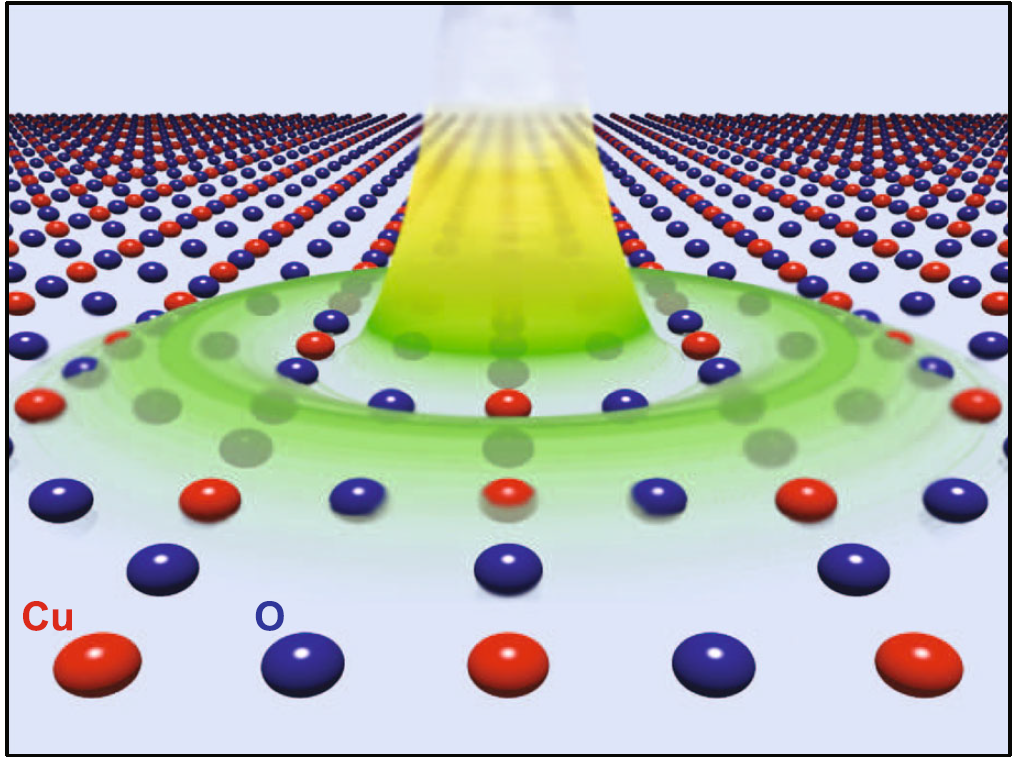
Our newly developed Jupyter Notebook for data reduction on reixs is now available.
News: REIXS Soft X-ray Spectroscopy Workshop
Posted on March 16, 2023
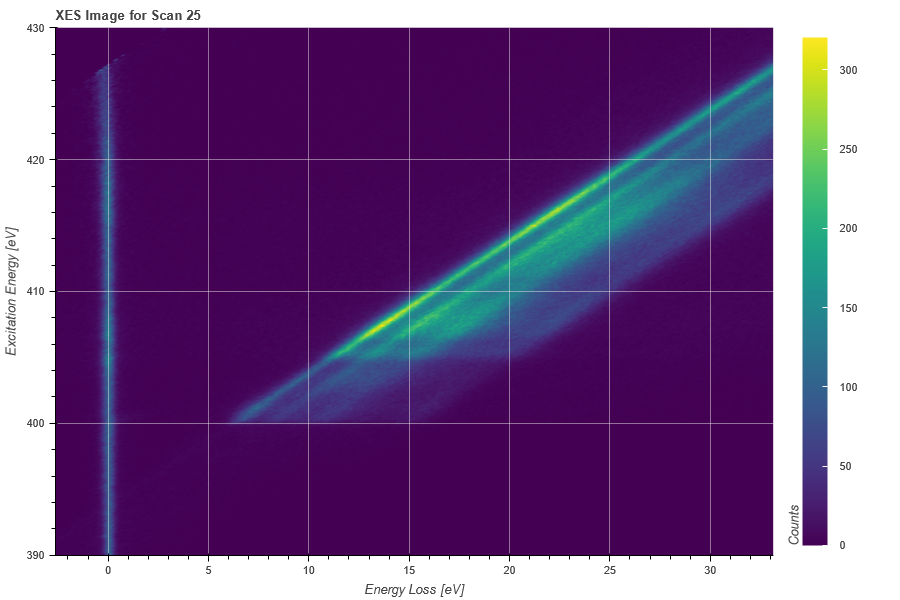
The CLS will be hosting this two-day virtual workshop on June 19-20, 2023. The first day will introduce prospective users to X-ray Emission Spectroscopy (XES) and its applications. The second day will provide current users with tutorial sessions on REIXS spectroscopy data analysis and simulation.
Research Highlight: Superconductivity in (Ba,K)SbO3
Posted on March 02, 2022
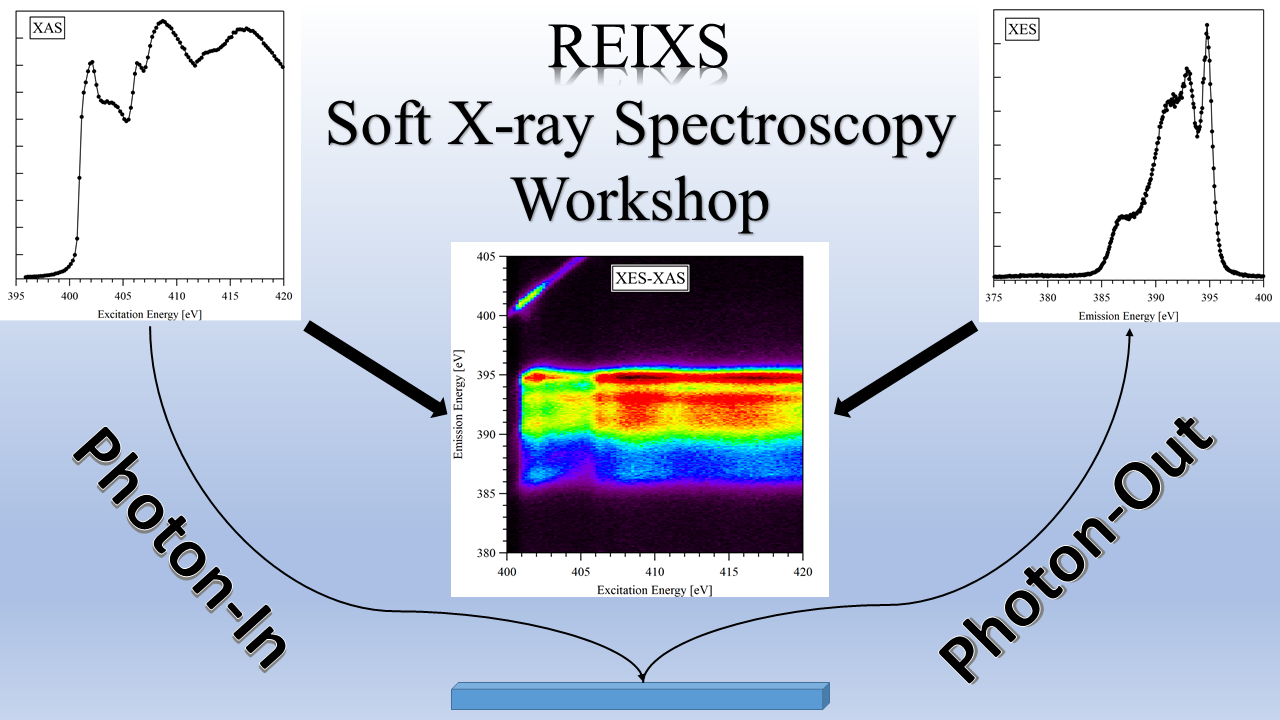
A collaborative work involving scientists from Max-Planck Institute for Solid Sate Research in Stuttgart (Germany), University of British Columbia (Canada), University of Saskatchewan (Canada), University of Tokyo (Japan), ISIS facility in Oxon (United Kingdom) and Canadian Light Source (Canada) has resulted in a publication in Nature Materials. Utilizing high-pressure high-temperature synthesis route, Minu Kim et. al were able to fabricate antimony-based superconductors, Ba1−xKxSbO3 (BKSO), which has a similar perovskite structure with the well-studied sibling compounds, bismuth-based superconductors, Ba1−xKxBiO3 (BKBO). It is shown that the charge density wave gap in the parent BaSbO3−δ is larger and the oxygen–metal charge transfer energy in doped BKSO is inverted (namely, positive value) as compared to that in the (Ba,K)BiO3 counterparts. Oxygen K-edge x-ray absorption spectroscopy reveals the weakened oxygen hole characters, consistent with its positive charge transfer value. Furthermore, similar to the behavior in cuprate superconductors after the hole-doping, the charge density wave in BKSO is suppressed via potassium substitution up to 65%, in which superconductivity emerges with the Tc up to 15 K. The discovery of an enhanced charge density wave gap and superconductivity in (Ba,K)SbO3 indicates that strong oxygen–metal covalency may be more essential than the sign of the charge transfer energy in the main-group perovskite superconductors.
Research Highlight: The observation of quasi circular pattern in Bi2212
Posted on January 29, 2021
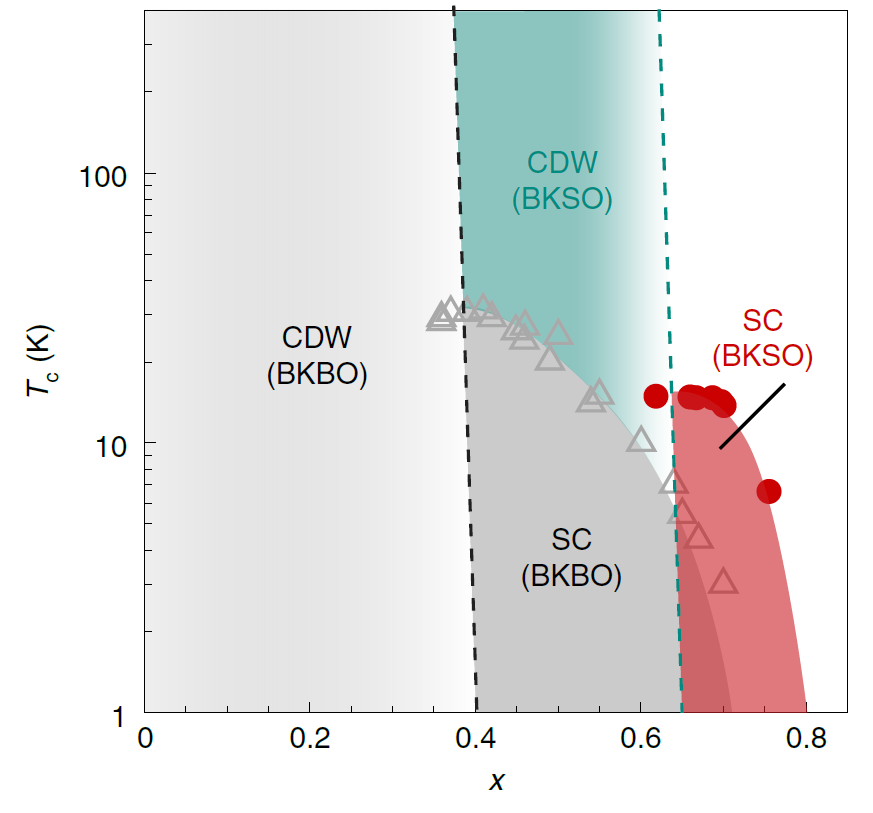
By combining energy-resolved and energy-integrated resonant soft x-ray scattering experiments, a new piece of information regarding the electronic correlation in the copper oxide plane of Bi2Sr2CaCu208+d (Bi2212) compounds has been revealed. Here we discover that the valence charge ordering, that competes with superconductivity, has dynamically formed a quasi circular pattern with its radius matching with the periodicity of the static charge order. It is indicated that a proposed non-monotonic Coulomb interaction as a result of both short- and long-range electron-electron interactions is effectively responsible for the occurrence of the distinct ring-like dynamic pattern. The inclusion of the Coulomb interactions may naturally be necessary for a complete theoretical description of the cuprates system.
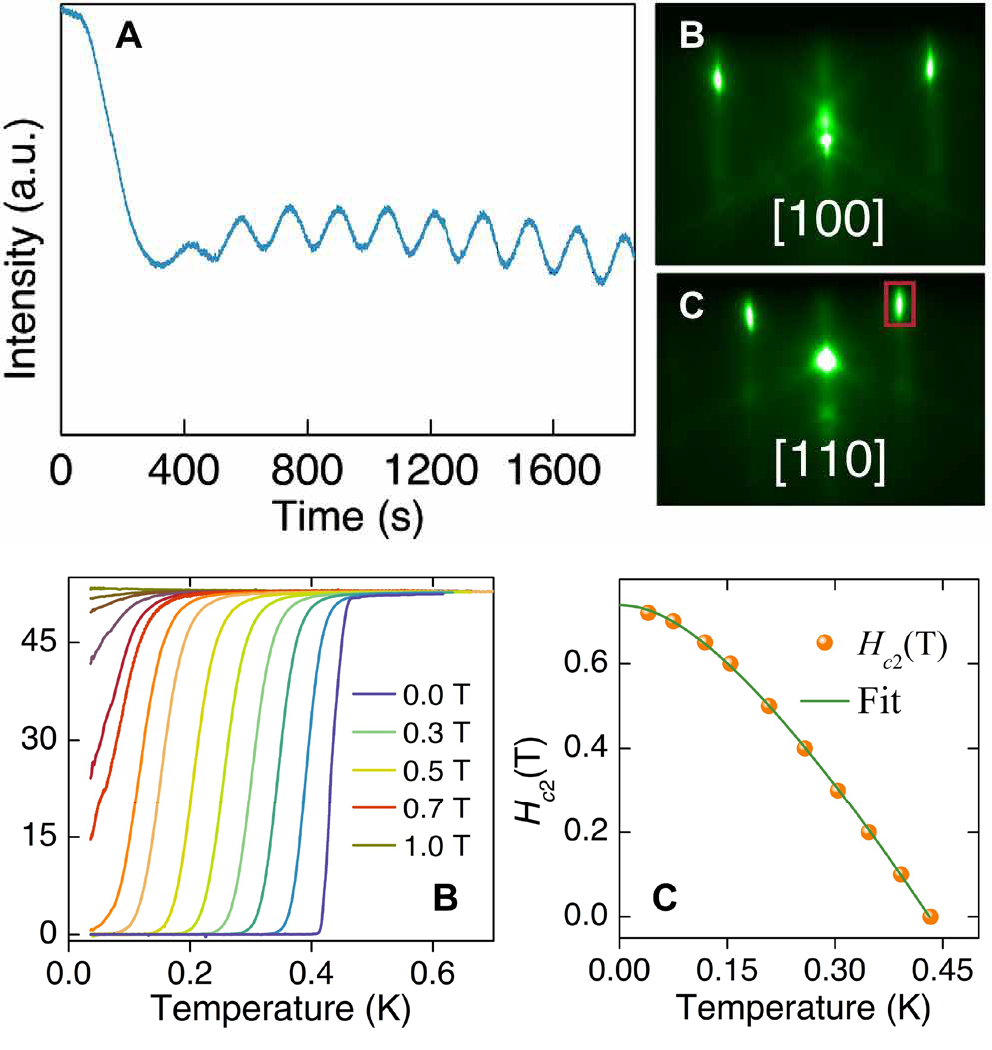
Research Highlight: High-quality single-crystalline epitaxial TiO film
Posted on January 27, 2021
We have successfully found a growth recipe for stabilizing a binary oxide material with a simple rocksalt structure but difficult to find in nature, namely titanium monoxide (TiO) film using molecular beam epitaxy (MBE) technique. The combination of in-situ spectroscopies capability at the REIXS beamline, ex-situ film characterizations, as well as band structure studies using density functional theory and tight binding model has led us to understand the important role of oxygen and titanium ions in the system. It behaves not only metallic but also superconducting, completely different behavior as compared to other transition metal monoxides series. It is important to note that this thin film fabrication was initially explored at the offline facility of the Surface Science Facility of the REIXS beamline (REIXS-SSF).